
Aquatic Business Workshops
Why Invest in Aquatic Business Training?
Aquatic centers are at a crossroads, struggling to keep their doors open amidst rising operational costs and insufficient programming revenue. However, by making a few strategic adjustments in how we design, develop, and deliver family-oriented water programs, we can ensure these vital community resources thrive.
Join us as we reveal the transformative changes, we made to our business plan that have allowed us to not only survive but also flourish within our community. At TAP LLC, we've pioneered "The 4 Pillars of a Sustainable Aquatic Facility," a game-changing framework that redefines success in the aquatic sector.
We will share how our innovative TAP 3D method—design, develop, and deliver—has revitalized our aquatic center, setting a benchmark for sustainability in the industry. Don’t miss this opportunity to learn how you can implement these strategies to secure the future of your aquatic facility!
Swimcerely
Sue & Mick Nelson
Setting New Standards In Water Programming And Management
TAP's Aquatic Business Workshop
Trainers/Facilitators: Sue & Mick Nelson, TAP (Total Aquatic Programming, LLC) In-person with your staff being part of the team. There is no limit on the number of staff attending.
STEPS TO SET UP A TRAINING
1. Call (719-238-1561) to receive workshop cost.
2. Discuss the timeline of training.
3. Set dates
4. Receive TAP's invoice
5. Register individuals attending the workshop
Email or Call for quotes at
719-238-1561 |
Snelson@totalaquatic.llc
Training is any planned activity to transfer or modify knowledge, skills, and attitudes through learning experiences. Staff may require training for various reasons, one being the need to respond to the demands of changing circumstances and new approaches to aquatic programming.
Training should address the needs of three levels of personnel because it takes all three groups to effect sustainable change.
- Policy makers, who are responsible for creating the environment needed for improved programming for all aquatic facility user
- Midlevel managers, who are responsible for planning and supervising programs
- The Aquatic Professionals who are responsible for delivering the specific aquatic programs
The critical elements of a training program include needs assessment, course work, learning tasks, and practical application. Learning requires active involvement. People prefer to learn differently – through visual stimuli, verbal interactions, and learning by doing.
TAP Training will include all three methods.
Nine Aquatic Business Workshops to Mix & Match
The Swim & Fitness Education (S.A.F.E.)
Mix and Match Workshops:
You get to choose the programs you would like to offer your staff for the two-day training. The S.A.F.E. Workshops are prepaid. Starting time is 9:00 am to 5 pm. Depending on what programs you choose, we can adjust the length of the workshop. The aquatic coordinator decides the lunch break.
The TAP Workshops combine lectures, interactive group planning, and practical experiences to bring together program managers and exercise leaders. This learner-centered environment enables course attendees to acquire the knowledge and skills needed to plan and implement ideas immediately. TAP is designed to accommodate daily variations in aquatic program needs through an innovative approach to program design and scheduling. TAP offers a variety of workshops under the umbrella of “S.A.F.E. Swim and Fitness Education,” focusing on the use of water for effective and sustainable programs. Remember, exercise should always be fun!
For our clients who are already members of the Aquatic Health Club Model Initiative, we offer discounts.
Workshop Listings:
1) Steps to develop an educational water wellness program – learn the positive aspects of a water wellness program. Increase your bottom line, increase your numbers, and engage your current members in their health care. 60 minutes in the classroom
2) Ai Chi Preparing “to swim” – (classroom & water lab). This course provides insight into an adult or teen who wants to enjoy being in the water but has Aquaphobia. Learn why so many adults do not know how to swim. 30 to 45 minutes in the classroom, 60 minutes in the water lab
3) H20 Club Adult with Challenges – This course will show how to take “swim lessons” and turn into a “perpetual aquatic program” for water safety, learn to swim, and vertical exercise—30 to 45 minutes in the classroom, 60 minutes in the water lab. We provide an example of a one-month programming schedule.
4) Aquatic Pain Education and Support via “Water Exercise – This course explains how water exercise plays a significant role in the lives of people with chronic pain. 30 to 45 minutes in the classroom
5) Dry Side / Wet Side – “Water Safety & Drowning Prevention”- This course will give you the problem and the solution. Each aquatic center, whether small, medium, or large, must take responsibility for providing the best water safety and drowning prevention education for its community. Evaluate and develop a water safety program that fits your community’s demographics. 60 minutes classroom
6) Pricing Aquatic Programs – Learn how to price your programs. Perfect opportunity to involve your staff in a project that will help them understand why programs need to have value before the community pays to exercise. 30 to 45 minutes in the classroom
7) Behind the Scenes: The Walk Through - This course will take you through the day-to-day and significant decisions in operations. Learn to look at facilities through the perspective of the potential buyer or renter, or through the eyes of the person responsible for the safety and well-being of the patrons; the premise is the same. 60 minutes in the classroom
8) Whose responsibility is a safe, healthy venue? This course will provide key stakeholders with up-to-date information to prepare to host and hold a USA Swimming event. 45 minutes in the classroom
9) Air & Water Quality – Trouble with breathing? – Drain your pool, and your air will be ok. Well, that is not reasonable. The next best thing is to learn how to manage your water and your filter equipment. 60 minutes in the classroom
3 Steps in the training program
STEP 1
The first step in the training design involves assessing training needs. This is done before the actual training.
The assessment is comprised of:
- Observation of current programs
- Interviewing program supervisor/coordinator
- Studying routine reports along with job descriptions & current budget
The second step involves defining the training program’s learning objectives derived from the need assessment.
STEP 2
STEP 3
The third step is creating and implementing a training program to improve performance.
Training Objectives - These objectives aim to increase service quality and develop a functional programming plan for aquatic users.
- Increase the “why and how” of aquatic programs for pool users.
- Develop a system for preventive education along with the water exercise (wet-side/dry-side)
- Build and strengthen skills in the specific tasks to be completed.
- Gain a better understanding of how the vertical and horizontal aquatic exercises support each other.
The 3 D Method of Total Aquatic Programming
DESIGN - DEVELOP - DELIVER
TOTAL AQUATIC PROGRAMMING LLC believes that change moves the world forward. We’re bringing a new perspective to your current water programs focusing on safety and health benefits. We will share ideas on each of our program pillars that will help you to increase your membership numbers and to create a safe and healthy environment.
Change Your Thinking to Increase your Aquatic Business Bottom Line
Want to increase your aquatic bottom line? Pricing can have a huge effect on profits, and your ability to have a sustainable facility. First and foremost, aquatic facilities must simply break the mold of pricing that has been carried over from the past.
Supporting Document "Change Your Thinking" - VRP (Valued Received Pricing) is a proven method of program pricing. It can make a facility financially sustainable based on cost to operate and the community's ability to pay for multi-shared programming.
The workshop is created to help you learn from our firsthand experience in program design. Investing in change is always hard. We will demonstrate why value to families and communities comes from learning new ways to increase your membership and improve your aquatic facility income.
4 PILLARS FOR A SUSTAINABLE AQUATIC FACILITY
Content
The Learn to Swim Programming & Water Safety Education Pillar. In this workshop we will be discussing your options for different learn to swim curriculums. This will include information for any of the national LTS curriculums or your own independent program.
Goals & Objectives
- You will learn about developing a pre-requisite water safety education program.
- You will learn the value of creating a feeder program to the other program pillars.
- You will be introduced to "THE DROWNING REPORT"
- You will be able to identify water safety educational opportunities.
4 PILLARS FOR A SUSTAINABLE AQUATIC FACILITY
Content - The Learn to Swim Programming & Water Safety Education Pillar
In this workshop we will be discussing your options for different learn to swim curriculums. This will include information for any of the national LTS curriculums or your own independent program.
Goals & Objectives
- Discover how to effectively develop a foundational water safety education program that sets the stage for success.
- Appreciate the critical role of a feeder program in enriching and supporting the other pillars of our initiative.
- Gain insight into "THE DROWNING REPORT," an essential resource for understanding water safety.
- Uncover valuable opportunities for impactful water safety education that can make a real difference in our community.
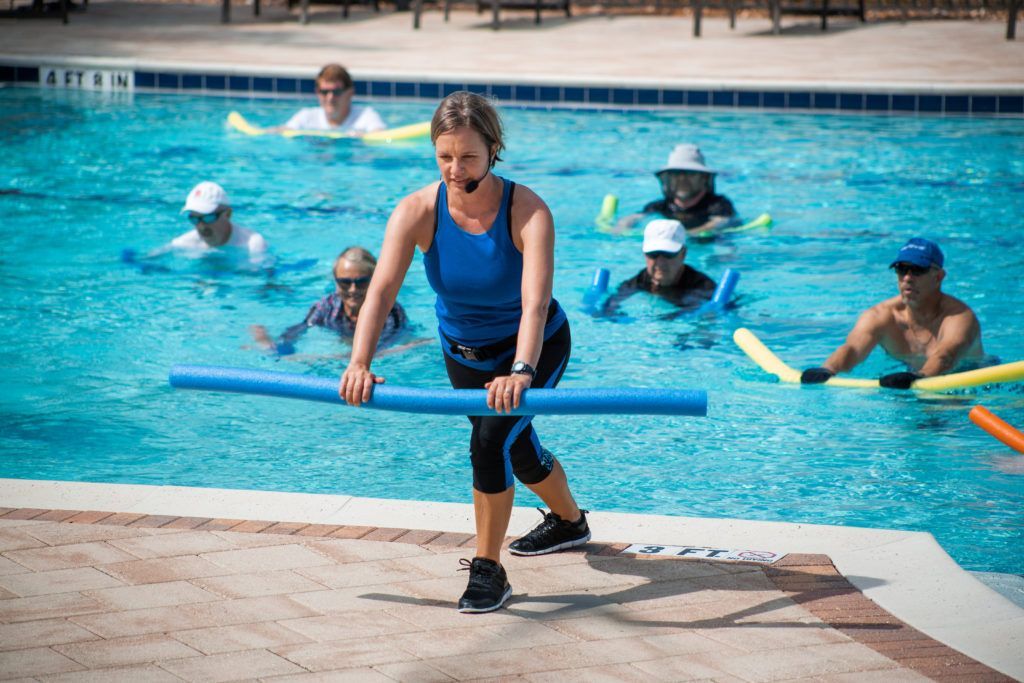
Content - The Fitness Pillar
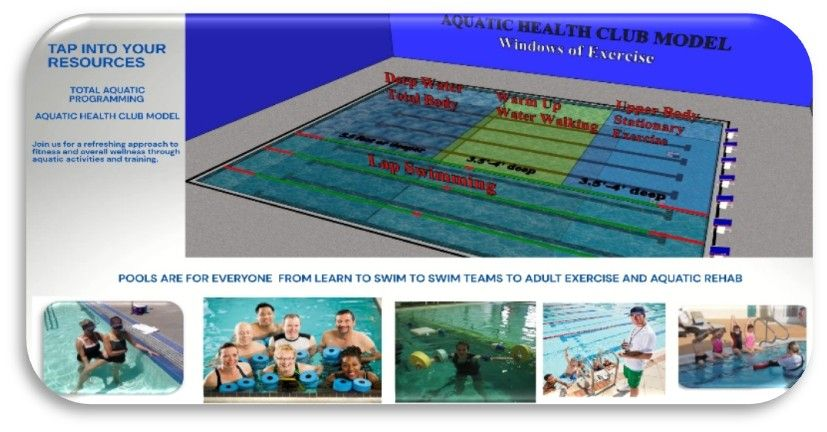
We will discuss how creating an Aquatic Health Club Model for the Future can bring land and water fitness together. You will learn why a multi-level approach is a positive aspect to any aquatic program.
Goals & Objectives
- Understand the benefits of the Aquatic Health Club Model for the aquatic facility and your members
- Learn the benefits of bringing land and water exercise coaches together.
- Learn how to design, develop, and deliver a variety of program options.
Content - The Aquatic Therapy Pillar
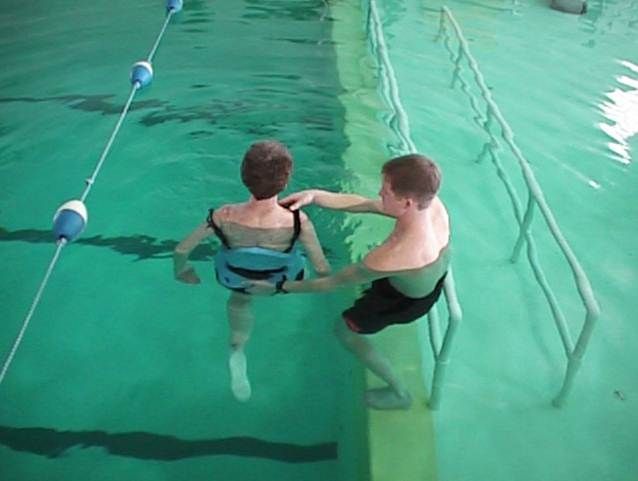
The Aquatic Therapy Pillar is becoming very popular with aquatic centers. This is another program that benefits the aquatic center and your community.
Goals & Objectives
- Develop relationships: Identify local therapy organizations to partner with
- Learn the difference between in house and outsourcing.
- Learn what therapists need to conduct their business.
- Learn how to design and develop an Aquatic Exercise Continuum
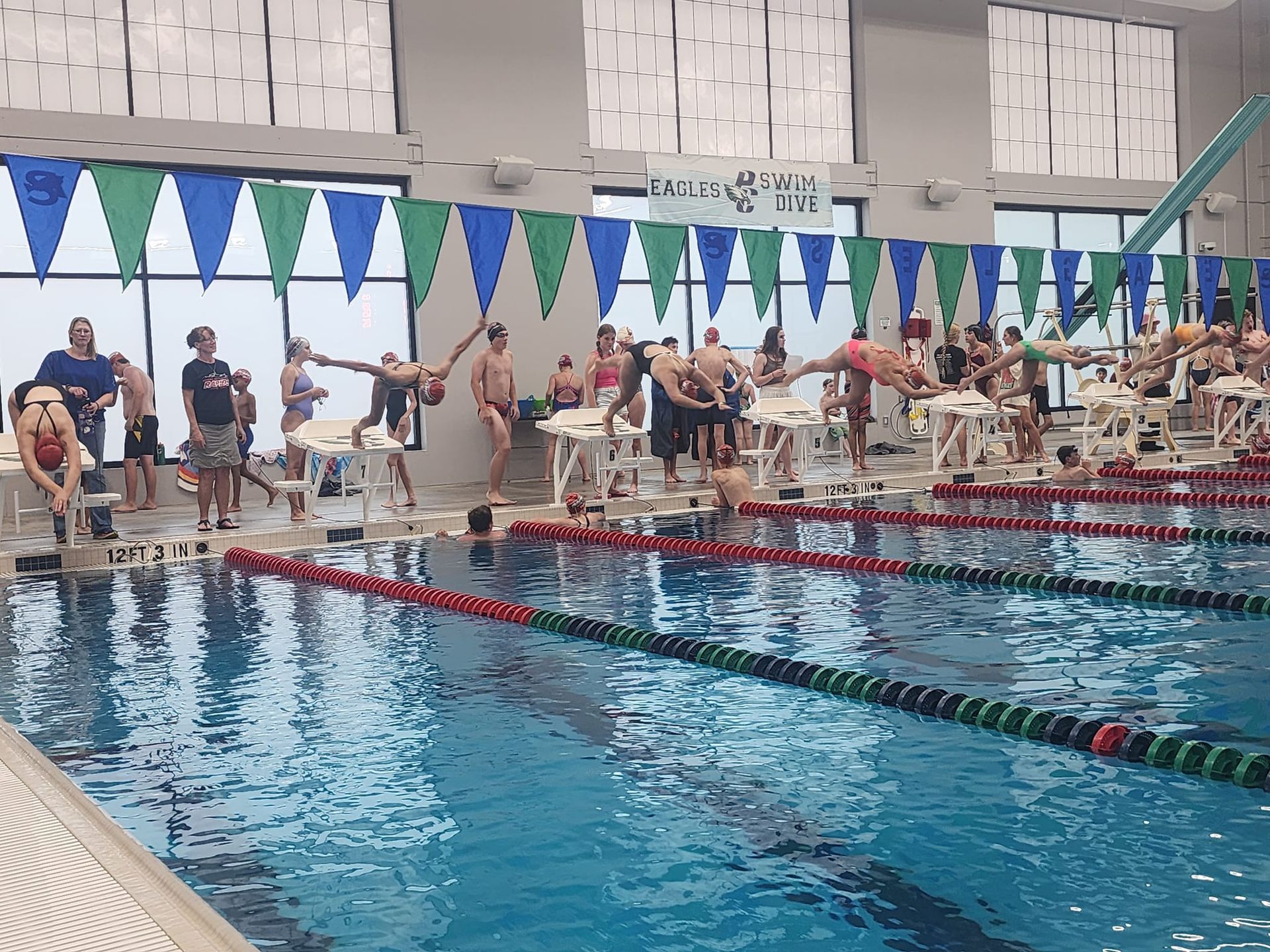
Content - The Sports and Recreation Pillar
The Aquatic Sports Pillar is another opportunity to create working relationships with different aquatic organizations.
Goals & Objectives
- Consider the advantages of each of the 5 aquatic sports.
- Identify & develop your aquatic sport in house or renting your lanes.
- Discover how to introduce cross training to your aquatic staff.
Questions email Sue Nelson: snelson@totalaquatic.llc or call 719-238-1561