The Seven Pitfalls of Project Development: An Aquatic Facility Planning Guide
The planning and development of an aquatic facility—regardless of scale—is a highly fragile process. It takes very little to compromise a project’s potential to serve the true needs of a school, club, or community. The pitfalls described below are predictable: we encounter them routinely. Recognizing the most common and consequential of these errors—what we call the Seven Deadly Sins of Pool Development—can help stakeholders avoid them.
01: Hiring the Wrong Firms for Project Studies and Feasibility
The planning and development of a pool project of any size is a fragile process. There are a few firms with a strong range of competencies; however, relatively few truly understand aquatic facility design for comprehensive community programming. Even firms that reference aquatics in their name or literature may lack an up-to-date plan or vision for a facility that meets tomorrow’s needs. The firm engaged for preliminary or full feasibility studies can effectively determine the scope and character of the facility—which may reflect current trends rather than the genuine needs of the community.
SOLUTION Request referrals for an Enterprise Plan or Feasibility Study and inquire about current design trends for community-focused total aquatics. Both types of plans or studies may be required depending on the scope of the project and the available budget.
02 Designing the Facility Before Programming Needs Are Established This occurs frequently.
Many designers favor a “cookie-cutter” approach—the more closely your project resembles something they have designed previously, the lower their in-house development costs. Firms will often encourage clients to accept pool configurations that do not align with their goals because the drawings are already on file. Standardization is an admirable objective but rarely yields the best possible outcome. Even when a standard design is technically suitable, clients seldom realize the cost savings they are entitled to.
SOLUTION Define the Temperature, Access, and Depth requirements for each pool your programs require—and hold firm to those programming goals. Do not compromise for budgetary reasons alone; there is almost always another means to achieve what you need.
03 Hiring the Wrong Design or Engineering Firm
The design firm must be willing to listen to the individual designated to represent the owner or facility director. Specification language directly determines who may bid on the project and what equipment will be supplied. Political considerations must be removed from this process, and all qualified bidders and products must be given fair consideration. Only then will a project achieve the best value for its investment.
SOLUTION When conducting the search for a design firm, clearly communicate from the outset that all building options must be explored and that bid language must remain non-exclusive. www.totalaquatic.llc
04 Building Only a Single Pool This outdated design approach is often the first option proposed by designers.
While it can conserve deck space and reduce the building’s footprint, a single pool—regardless of how it is bulkheaded—cannot provide variable water temperatures for diverse programming. Temperature control is essential for learn-to-swim, aquatic rehabilitation, and aquatic exercise, all of which are both valuable community services and financially sustainable programs.
SOLUTION Establish clearly that the building footprint must accommodate multiple pools. In most cases, a separate pool is more cost-effective than a stretched pool or bulkhead configuration.
05 Prioritizing Recreational Novelty Over Community-Based Aquatic Services
There is nothing inherently wrong with water slides or zero-depth entry areas. However, these features should not define the facility’s identity. Novelty attractions frequently fall into disuse once the initial appeal fades. Recreational elements should be treated as supplementary additions; the primary investment should support programmable water focused on drowning prevention, fitness, and wellness.
SOLUTION Thoughtful, innovative design can incorporate multiple features within a single pool environment. Diving, slides, spray features, and vertical exercise programs all function optimally at 88°F, meaning a single tank with varied access points and depths can serve diverse needs effectively.
06 Partnering With an Entity Unable to Deliver Total Aquatic Programming
Partnering with a school, YMCA, club, or other organization can be a significant asset to a project. However, it is essential that all parties agree from the outset on their respective responsibilities. Communities that invest in a new facility only to receive outdated programming experience significant frustration. Every program must be developed with a commitment to excellence and safety. SOLUTION TAP provides an Aquatic Programming Specialist to assist your organization. We have established partnerships with leading national programming agencies. Contact snelson@totalaquatic.llc for information regarding Learn-to-Swim, Aquatic Exercise, Aquatic Therapy and Rehabilitation, Risk Management, and competitive swimming.
07 Failing to Appoint a Qualified Local Project Lead
Whenever community resources and public funding are involved, individuals with private agendas will emerge. A strong project leader must be in place—one who can navigate the needs-versus wants process and serve as the champion for quality aquatic infrastructure. This is a demanding responsibility, but it is among the most critical factors in a project’s success. Pool construction is a complex undertaking. Many companies claim modern pool-building expertise yet subcontract the actual construction to temporary workers who lack the requisite skills to execute it correctly. SOLUTION A qualified pool professional must be present on-site throughout construction. The guiding principle is straightforward: the stamped architectural drawings define how the pool must be built. Any deviation—by contractors or project managers—must be immediately escalated to the pool owners and resolved. A pool not built 100% to architectural and engineering specifications risks non-issuance of an occupancy permit by the State Department of Public Health.
To Get started
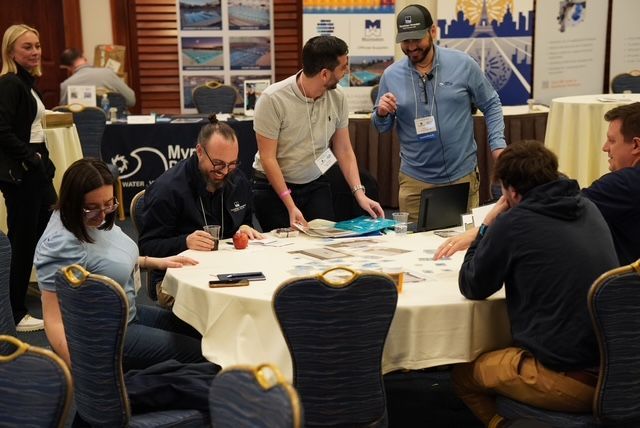
Attend a TAP Build & Program A Pool Workshop or contact TAP to arrange a Custom BAP Workshop at your location.
- National Build & Program A Pool - offered annually in February in conjunction with AOAP
- Coaches Build & Program A Pool - offered in September in conjunction with ASCA
- Virtual Build & Program A Pool - offered on demand "any day, any time" work at your own speed.
Workshop Information: www.totalaquatic.llc
Project Planning & Facilities: mick@totalaquatic.llc
Aquatic Programming: snelson@totalaquatic.llc
Aquatic Marketing & Design: knelson@totalaquatic.llc
Pool Chat Blogs